
Personal introduction
“The first tooth has arrived. Hooray!”
That tiny white speck somehow feels like a huge milestone.
And straight away, something new begins: toothbrushing. I will admit that it is not always the favourite part of the day. Babies and toddlers rarely think: lovely, here comes the toothbrush again.
But with a calm approach and a familiar routine, it usually becomes normal sooner than you might expect.
Start brushing from the very first tooth
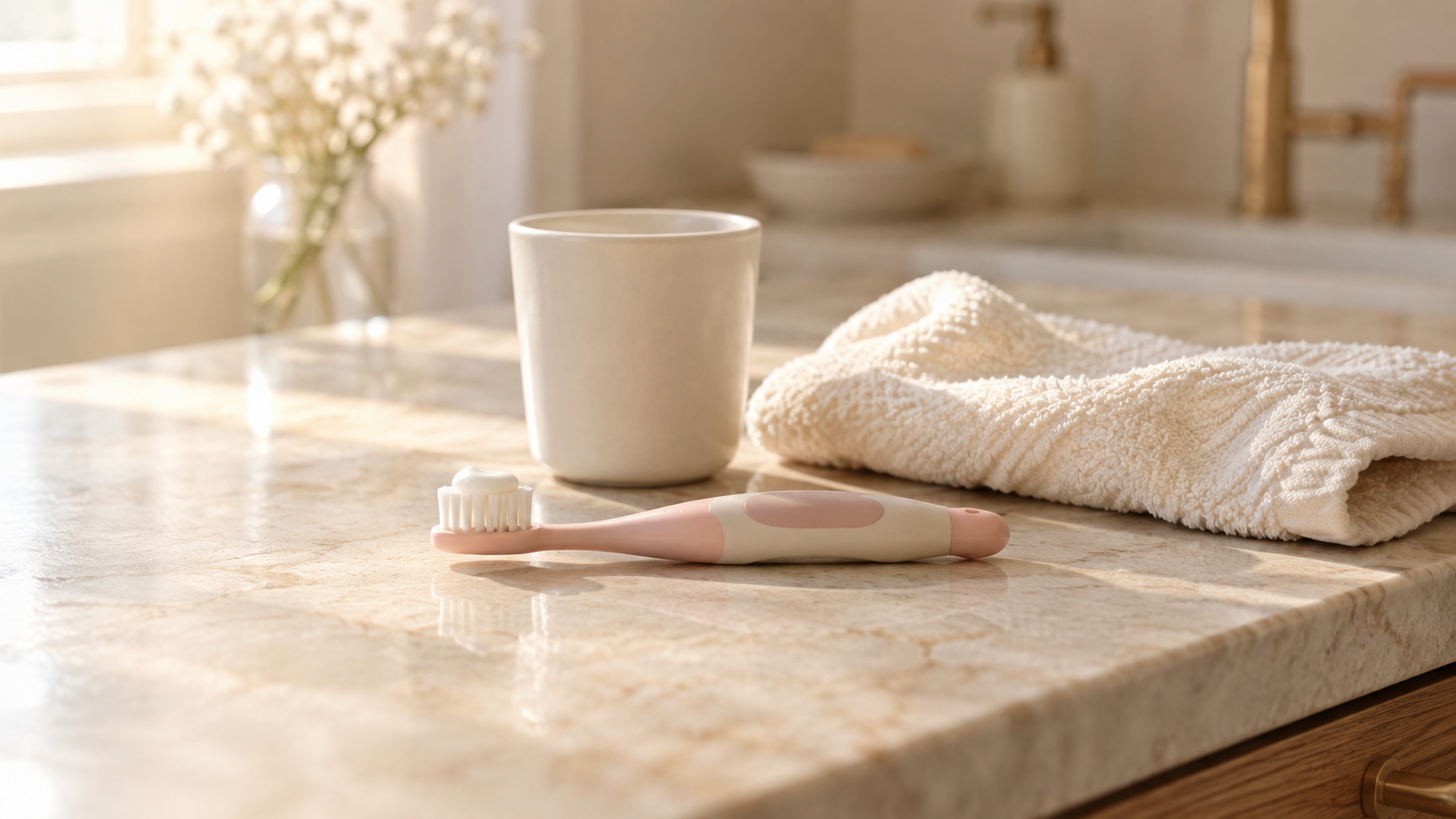
As soon as the first tooth appears, you can begin brushing. Use a small children's toothbrush with soft bristles and a small amount of fluoride toothpaste that is suitable for your child's age.
Brush gently and clean where the tooth meets the gum too. Newly erupted teeth are still vulnerable, so daily fluoride protection matters from the start.
Why baby teeth matter so much
Baby teeth are temporary, but they are certainly not unimportant. Your child uses them to chew, speak and smile. They also hold space for the adult teeth that will appear later.
Decay in a baby tooth can hurt and make eating or sleeping difficult. ‘It will fall out anyway’ is not a reason to give it less care. Tiny teeth deserve big attention.
Which children's toothpaste should you choose?
Choose a fluoride toothpaste that clearly states the age group it is intended for. Fluoride strengthens enamel and helps protect against tooth decay.
You only need a small amount. The goal is to brush — not to make it look as though a toothpaste factory has exploded inside their mouth.
Not sure which toothpaste or how much to use? Follow the age guidance on the packaging or ask your dentist or dental hygienist.
Learning to brush together
Let your child start by themselves. It makes brushing more enjoyable and helps them learn the routine. Always follow up by carefully brushing every tooth yourself.
A toddler who tidies away their toys, puts on their pyjamas and brushes every tooth perfectly without being asked: I have yet to meet one. Children genuinely need your help for quite a while.
Keep brushing for them until around the age of ten. The fine motor skills needed to reach every surface develop gradually.
- Brush twice a day.Make morning and bedtime your two regular brushing moments.
- Use fluoride.Choose a toothpaste suitable for your child's age.
- Brush together.Let your child practise, then calmly brush again for them.
- Keep it light.A song, timer or familiar order makes brushing predictable.
Your child's first dental visits
Take your child to the dentist or dental hygienist once the first tooth has appeared. You could bring them along when you attend your own check-up.
They can become familiar with the chair, the light and the people at the practice in a relaxed way. Early visits need not be daunting. They are there to help your child get used to dental care and to give you practical guidance.
Why not take a bottle to bed?
Milk and sweet drinks contain sugars. If a child sips them for a long time at night, the teeth are repeatedly exposed to those sugars. There is also less saliva during sleep to protect the teeth.
After brushing at night, offer water only. If your child needs a bottle in bed, fill it with water.
In short
- Start with the first tooth.Do not wait until all the baby teeth have arrived.
- Brush carefully every day.Two regular brushing times create calm and consistency.
- Choose fluoride toothpaste.Always follow the age guidance on the packaging.
- Visit the dentist together early.This makes dental care feel familiar from the beginning.
- No milk or sweet drinks in bed.After the bedtime brush, water is the safe choice.
Caring for tiny teeth together
Do you have questions about brushing or caring for your child's mouth?
Please ask. Mariska AI can help you get started straight away, and you can always contact Claudia for personal advice.