
Personal introduction
“Are you still using a manual toothbrush?”
It is a question I often ask in the treatment room.
Not because a manual toothbrush is necessarily wrong. With good technique, it can do a perfectly good job. But honestly, an electric toothbrush makes it that little bit easier for many people to clean every area carefully.
And making oral care easier is not lazy. It is sensible. 😊
More movement, less effort
An electric toothbrush makes many small movements in a short time. You do not need to scrub firmly back and forth. Place the brush gently against the tooth and let it work.
That often gives you more control, especially in places that are easy to miss with a manual brush, such as the back of the mouth or along the gumline.
Why electric brushing often works better
Electric brushing can make it easier to remove plaque carefully, particularly if manual technique is difficult. The brush head's steady movement does part of the work for you.
It is not a magic wand, though. You still need to brush twice a day for about two minutes, use fluoride toothpaste and give every tooth some attention. The brush helps; your daily routine makes the real difference.
Let the toothbrush do the work
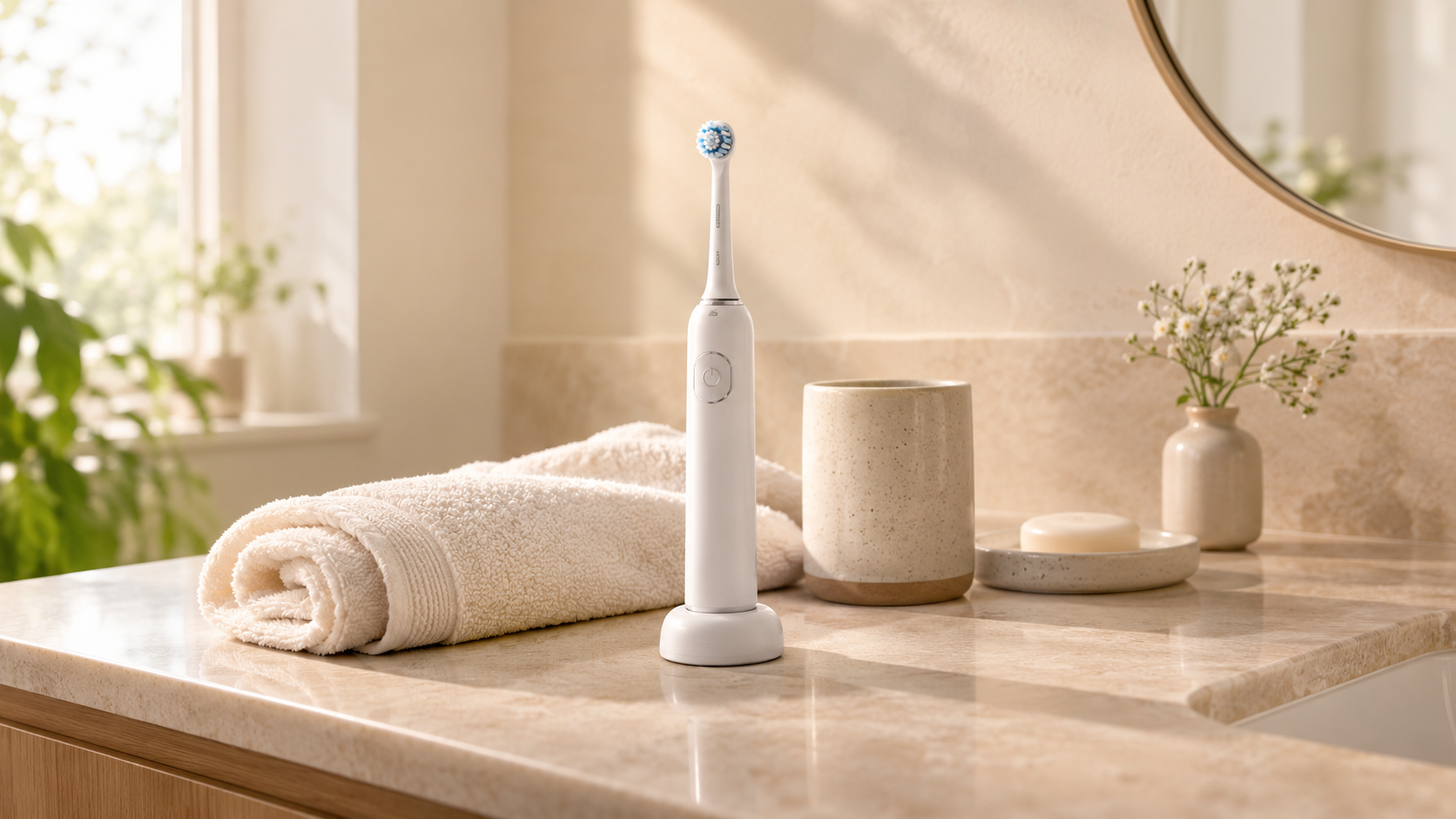
With a round electric brush head, guide the brush one tooth at a time. Hold it for a few seconds on the outside, the inside and the biting surface, then calmly move on to the next tooth.
There is no need to scrub. In fact, pushing the brush in every direction only makes things harder for you.
- Brush twice a day.Take about two minutes and share that time evenly across your whole mouth.
- Use a small, soft brush head.It will help you reach the back teeth and clean along the gumline.
- Let the pressure sensor help.If the warning light comes on, ease off and let the brush head move.
- Replace a worn brush head.When the bristles spread out, thorough brushing becomes more difficult.
Do not forget between your teeth
Even a good electric toothbrush cannot clean fully between your teeth. Plaque builds up easily in those spaces.
Use a suitable aid every day, such as an interdental brush or dental stick. The right size depends on the spaces between your teeth. If you are unsure, ask your dental hygienist or dentist to show you.
Which electric toothbrush is right for you?
You do not automatically need the model with the most settings. A good electric toothbrush should mainly feel straightforward and comfortable to use.
- Small brush head.Gives you control and helps you reach each tooth individually.
- Pressure sensor.Useful if you tend to press too firmly.
- Timer.Helps you brush for long enough and divide the time evenly.
- Gentle brushing mode.A sensitive setting can feel more comfortable if your gums are delicate.
My advice
Still using a manual toothbrush and wondering whether to change?
Try an electric toothbrush for a few weeks. Give yourself a little time to get used to a different way of brushing.
There is a good chance you will notice how clean and smooth your teeth feel.
And as a dental hygienist, that makes me very happy. 😊
Personal advice
Unsure which toothbrush is best for your mouth?
Contact Claudia or ask Mariska AI. We will help you find an electric toothbrush and routine that feel comfortable and suit you.